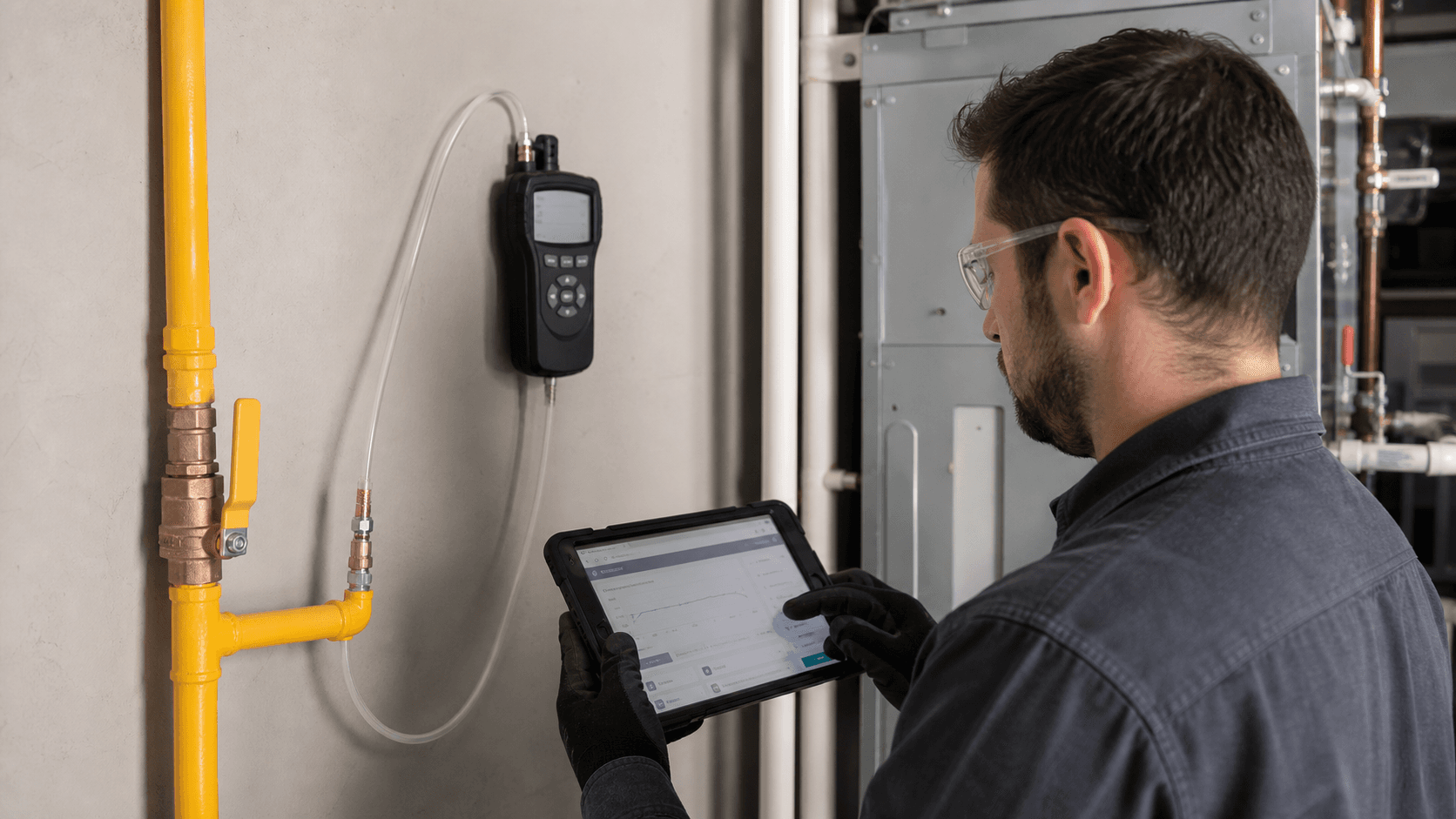
Gas type, permit fields, line scope, test pressure, duration, manometer range, readings, photos, time, location, and notes stay together.
Industries
For gas and plumbing contractors
GasManometer IQ
Document low-pressure gas tests with cleaner field evidence
GasManometer IQ captures manometer readings, gas type, permit fields, test duration, gauge range, job photos, GPS, timestamps, technician notes, and customer or inspector sign-off in one report.
Test contextPermit-ready
Reading evidenceCalibrated
Handoff clarityInspector-aware
Reports can include calibrated manometer readings or reviewed manual entries with supporting photos and technician details.
Structured reports give contractors a cleaner record for customer handoff, office review, permit files, and inspection conversations.
Low-pressure gas testing
Built around the way this pressure-test work is actually reviewed.
Keep tightness-test records organized for rough-in, appliance changeout, service, remodel, reconnect, and inspection workflows while leaving safety decisions and approvals with qualified professionals and local authorities.
Guide the crew while the evidence still exists.
Prompt technicians for the readings, photos, identifiers, location, timestamp, notes, and sign-off details that usually get reconstructed later from camera rolls, texts, paper forms, and memory.
Give operations a packet they can inspect before sending.
Keep test context, reviewer notes, exceptions, and report modules in one workflow so missing fields are visible before the record reaches a customer, builder, inspector, facility team, or internal QA file.
Show the work without overstating approval.
Reports are written as decision-support evidence: structured, timestamped, calibration-aware documentation that supports review without claiming certification, legal determination, or regulatory sign-off.
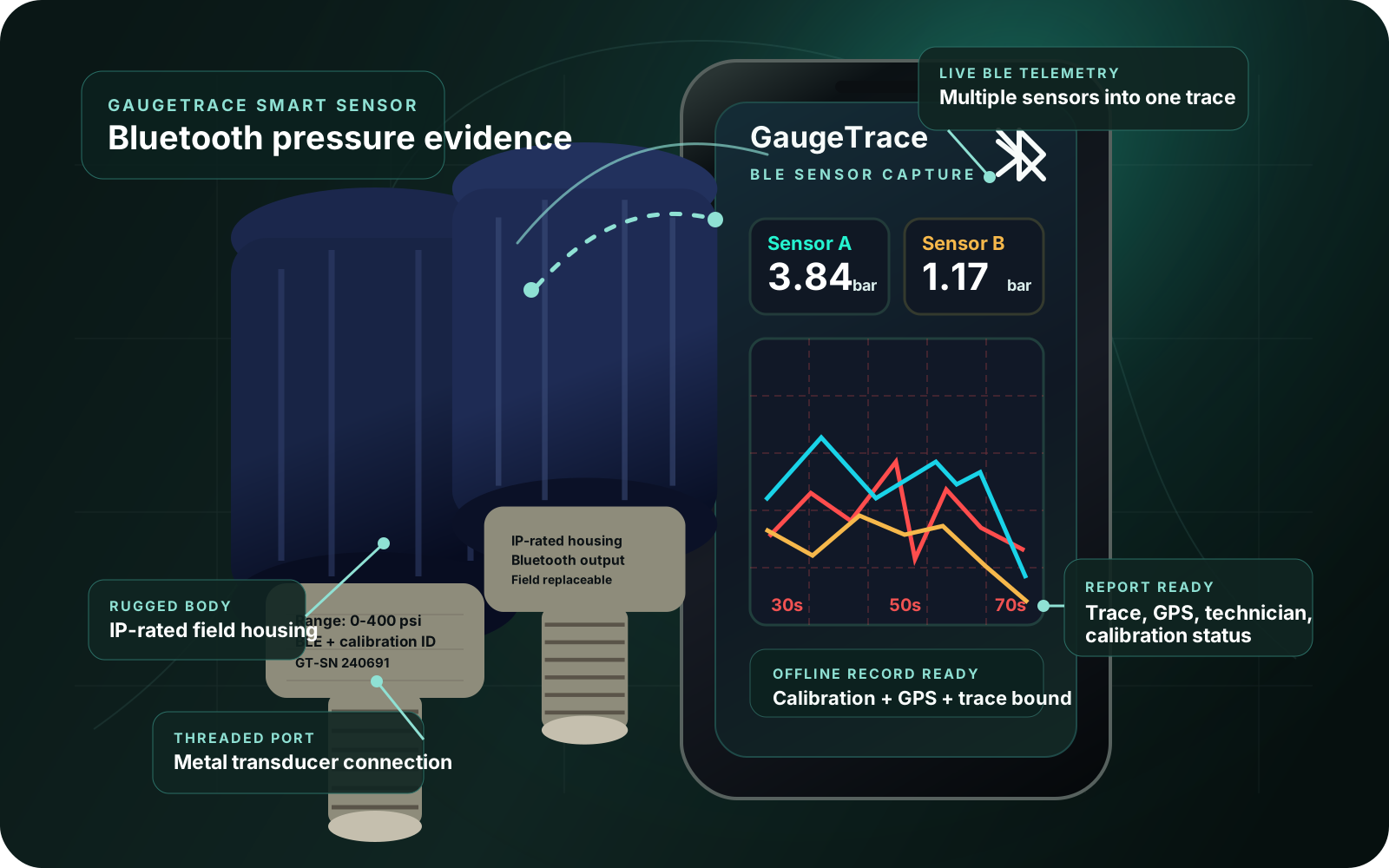
Bluetooth smart sensor
The sensor layer behind the evidence packet.
GasManometer IQ can pair Bluetooth smart-gauge capture with manual fallback, preserving calibration identity, pressure trace, timestamp, location, technician, and review status in the same gas evidence packet.
Capture low-pressure gas tightness and manometer test readings with gas type, test duration, gauge or manometer range, and job-specific permit details.
Tie calibrated readings, photos, GPS, timestamps, technician identity, notes, and safety observations to the correct gas line or appliance scope.
Generate a clear report for customers, builders, inspectors, office teams, and permit files without replacing qualified review or approval.
Industry needs
Replace scattered field evidence with a review-ready record.
Missing permit context
Gas test records can lose permit number, gas type, test pressure, duration, or appliance scope when crews rely on paper forms and camera rolls.
Reading disputes
Customers, builders, and inspectors may ask when a manometer reading was taken, by whom, and what setup or gauge range was used.
Slow office follow-up
Reports take longer when photos, sign-offs, pressure readings, safety notes, and technician details arrive in separate messages.
Workflows
Sector workflows, terminology, and test context in one place.
Tightness testing
Record start and finish readings, test duration, gas type, manometer range, isolated sections, and site notes for low-pressure line checks.
Permits and inspections
Capture permit numbers, address details, inspector fields, required photos, and sign-off so office teams can assemble review-ready records.
Service and changeouts
Document appliance additions, meter-to-fixture work, reconnects, remodels, and repairs with readings, photos, technician details, and customer acknowledgement.
Evidence requirements
Capture the details people ask for after the job is complete.
Manometer reading record
Capture calibrated or reviewed manual readings with start and end values, test duration, gas type, gauge range, timestamp, and technician identity.
Photos and site notes
Attach photos of the manometer, capped or isolated lines, meter area, appliance connection, permit tag, and relevant site conditions.
Sign-off fields
Collect customer, builder, site-contact, or inspector acknowledgement when required, with notes that preserve observations without making approval claims.
Field flow
From job setup to report handoff.
Select the job, gas type, permit details, and low-pressure gas test purpose.
Enter the manometer or gauge range, target test pressure, isolated section, and required test duration.
Capture calibrated manometer readings or enter a reviewed manual reading with start and finish values.
Add photos, GPS, timestamp, technician details, safety notes, and observed site conditions.
Collect customer, site-contact, builder, or inspector sign-off when the job requires it.
Review and send the report for customer handoff, permit file, inspection record, or office review.
Reports and systems
Deliver the evidence package without rebuilding it by hand.
GasManometer IQGas evidence packet
Needs reviewJob, contractor, customer, and permit summaryGas type, appliance scope, and line or section identifiersTest pressure, duration, and manometer or gauge rangeCalibrated reading timelineMeter, line, appliance, permit, and manometer photosTechnician, GPS, timestamp, and safety notes
What reviewers see
One packet with the field story, proof trail, and handoff context.
Each industry page now mirrors the actual buying pain: reviewers do not just need a reading, they need to know which asset or line was tested, who captured it, what evidence supports it, and what still needs professional review.
Permit-readyGas type, permit fields, line scope, test pressure, duration, manometer range, readings, photos, time, location, and notes stay together.CalibratedReports can include calibrated manometer readings or reviewed manual entries with supporting photos and technician details.Inspector-awareStructured reports give contractors a cleaner record for customer handoff, office review, permit files, and inspection conversations.
Report modules
Job, contractor, customer, and permit summaryGas type, appliance scope, and line or section identifiersTest pressure, duration, and manometer or gauge rangeCalibrated reading timelineMeter, line, appliance, permit, and manometer photosTechnician, GPS, timestamp, and safety notesCustomer, builder, site-contact, or inspector sign-offGas test PDF report
Integration points
Job management and dispatch recordsCustomer, builder, and inspector contact recordsPermit and inspection filesCloud photo storageEmail and PDF report delivery
GasManometer IQ helps contractors organize low-pressure gas test evidence and documentation. It does not certify a gas system, determine whether a system is safe, approve work, or replace qualified judgment, code requirements, utility rules, or inspector authority.
Book demo
Make low-pressure gas test records easier to review
Give field crews a faster way to capture manometer evidence and give customers, inspectors, and office teams a clearer report for permit, service, and handoff records.